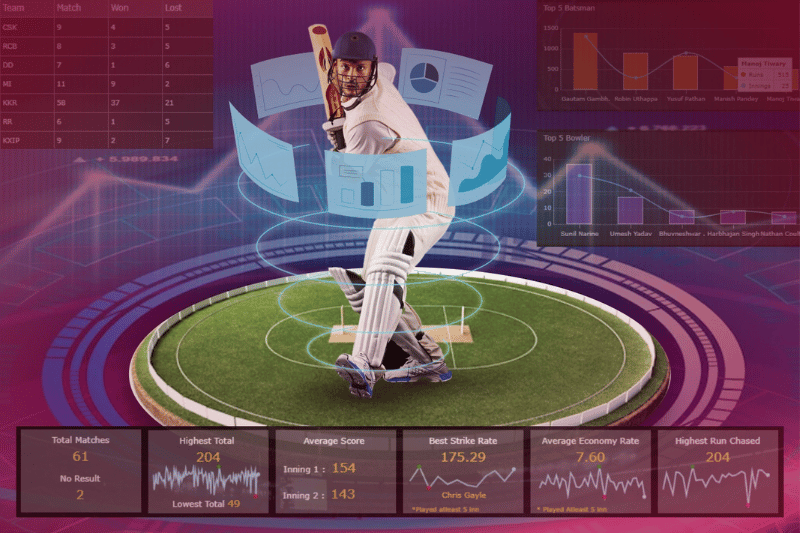
Cricket has always been a game of uncertainty, where a single over can change the entire outcome of a match. However, in recent years, the sport has undergone a significant transformation. With the rise of advanced data analytics, teams, analysts, and fans are now able to interpret the game in ways that were once unimaginable.
From predicting player performance to understanding match dynamics, data-driven insights are redefining how cricket is played, watched, and discussed.
The Rise of Data in Cricket
Traditionally, cricket analysis relied heavily on expert opinion, historical performance, and on-field intuition. While these elements are still important, modern cricket has embraced technology to enhance accuracy and depth.
Today, data is collected on nearly every aspect of the game, including:
- Ball-by-ball performance
- Player strike rates across conditions
- Pitch behavior under different weather conditions
- Team performance in specific match situations
This wealth of information allows analysts to identify patterns and trends that were previously overlooked.
How Analytics Enhances Match Understanding
One of the biggest advantages of data analytics is its ability to provide context. Instead of simply looking at a scorecard, fans and experts can now evaluate how and why a match unfolded in a certain way.
For example:
- A batter’s performance can be analyzed against specific bowlers
- Teams can assess powerplay efficiency versus death-over execution
- Field placements can be optimized based on historical shot maps
These insights not only help teams strategize better but also make the viewing experience more engaging for fans.
The Role of Predictive Models
Predictive analytics has become a major component of modern cricket discussions. By using historical data and real-time inputs, models can estimate:
- Win probabilities during different phases of a match
- Expected scores based on pitch conditions
- Player impact in specific match scenarios
While these predictions are not always perfect, they provide a structured way to understand the shifting momentum of a game.
Platforms like Reddy Anna are often referenced by enthusiasts who follow structured match data and performance trends to better interpret ongoing matches.
Impact on Team Strategies
Cricket teams at both domestic and international levels are increasingly relying on analytics departments. These teams use data to:
1. Optimize Batting Orders
By analyzing player strengths against certain bowling types, teams can adjust their lineup dynamically.
2. Improve Bowling Strategies
Bowlers can target specific weaknesses of batters, such as difficulty against short balls or spin variations.
3. Field Placement Precision
Advanced heatmaps allow teams to position fielders more effectively, reducing scoring opportunities.
Fan Engagement in the Digital Era
Data analytics is not just transforming how teams play, it’s also changing how fans engage with the sport.
Modern fans are more informed and analytical. They don’t just watch matches; they interpret them. With access to detailed statistics and real-time updates, fans can:
- Compare player performances instantly
- Track match momentum shifts
- Engage in deeper discussions on social platforms
This shift has led to the emergence of digital platforms that focus on delivering structured sports insights, making cricket more interactive than ever before.
The Influence of T20 Leagues
The growth of T20 leagues such as the IPL, BBL, and The Hundred has accelerated the adoption of analytics in cricket. These fast-paced formats demand quick decision-making, where data plays a crucial role.
In T20 cricket:
- Every ball carries significant importance
- Strike rates and economy rates are heavily scrutinized
- Matchups between players are analyzed in detail
As a result, teams rely on data to gain even the smallest competitive edge.
Challenges of Data-Driven Cricket
While analytics has brought many advantages, it also comes with challenges:
Over-Reliance on Numbers
Cricket is still a human game, and not everything can be predicted through data.
Data Interpretation
Misinterpreting statistics can lead to flawed strategies.
Balancing Instinct and Insight
The best teams find a balance between analytical insights and on-field intuition.
The Future of Cricket Analytics
The future of cricket will likely see even more integration of technology, including:
- AI-driven match simulations
- Real-time decision-support systems
- Enhanced fan dashboards with interactive data
As technology continues to evolve, the line between analysis and experience will continue to blur, making cricket more immersive for everyone involved.
Conclusion
Data analytics has fundamentally changed the way cricket is understood and experienced. From improving team strategies to enhancing fan engagement, its impact is undeniable.
While the essence of cricket remains rooted in skill and unpredictability, the addition of structured insights has added a new dimension to the game. As more platforms and technologies emerge, the role of analytics will only continue to grow, shaping the future of cricket in exciting ways.