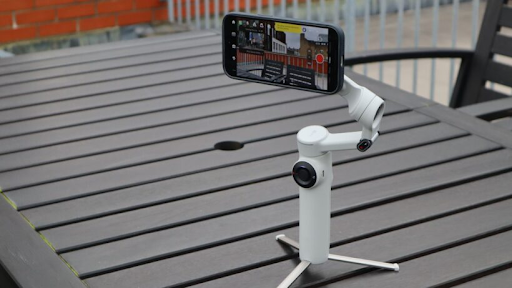
In recent years, the camera performance of smartphones has advanced dramatically, making video shooting a part of everyday life. However, shaky, jittery footage caused by hand movement can significantly diminish the appeal of your videos. The solution to this problem is the smartphone gimbal. Its three-axis stabilization mechanism instantly corrects camera shake, allowing anyone to easily shoot smooth, professional-level video. It has become an essential item for vlog creators, travel record keepers, and anyone wanting to capture fleeting moments at events.
In fact, data shows that in the Japanese video content market, sales of smartphone gimbals increased by 18% year-on-year in 2023, with 60% of purchasers being beginners, demonstrating its immense popularity. This article will provide detailed guidance on key points for beginners to choose the right model without making a mistake, and introduce user-friendly, recommended models.
Clarify Your Needs
The most crucial step before purchasing is to clarify “What will I use the smartphone gimbal for?” The necessary features and size will vary significantly depending on the usage scenario.
For example, a lightweight, easy-to-carry model is suitable if you are regularly shooting vlogs in the city. Conversely, if you are filming in windy travel locations or recording long videos, stability and battery life are prioritized. Furthermore, the decision on features like “Smart Tracking,” “Fill Light,” or “Extension Rod” changes based on whether you are filming a child’s sports day or creating product review videos. A survey indicates that 70% of beginners purchase an inappropriate product because they “have not clearly defined their needs.”
Understand the Essential Functions
Understanding the core functions of a smartphone gimbal will make the selection process easier.
- The essential “Three-Axis Stabilization” corrects camera shake in three directions: Pan (left/right), Tilt (up/down), and Roll (rotation). Stable footage cannot be achieved without this.
- Next, “Smart Tracking” is a highly convenient feature for solo shooting, as it automatically tracks and follows a subject. The latest models achieve high-precision tracking using facial recognition and AI.
- “Battery Life” is critical for prolonged use, with 8 to 15 hours of runtime generally desirable.
- Other features to consider based on your needs include an “Extension Rod” to widen your shooting angle, a “Fill Light” for bright shooting in dark places, and a “Foldable Stand” that allows it to be used as a tripod.
Brand and Reliability
Brand reliability is a major factor in selecting a smartphone gimbal. Top market share brands include DJI (Da-Jiang Innovations), OOWA, and Insta360 (Shenzhen Arashi Vision).
- DJI holds over 70% of the global market share and is highly regarded for stability and rich features.
- OOWA offers products tailored for the Japanese market, balancing excellent usability and cost-performance.
- Insta360 is famous for its 360-degree cameras, but its “Flow Series” of smartphone gimbals is popular among beginners for combining lightweight design with high functionality.
These brands enforce strict product quality control and often provide a warranty period of one year or more, with swift repair support. Beginners are advised to avoid inexpensive products from unknown brands, as they are more likely to have issues with component durability or stabilization performance.
Selection Based on Budget
To help you choose efficiently based on your budget, here are recommended models across three price ranges:
| Price Range | Recommended Model | Key Features | Beginner Suitability |
| Below ¥10,000 (Entry-Class) | OOWA Smart X2 (MSRP ¥8,980) | 3-axis stabilization, Smart Tracking, 10-hour battery, foldable stand. | Compact, necessary features, excellent value. |
| ¥10,000 – ¥20,000 (Mid-Class) | DJI Osmo Mobile 7P (MSRP ¥14,990) | High-precision AI Tracking (ActiveTrack 6.0), 15-hour battery, Fill Light. | Versatile for various scenes, long runtime. |
| Insta360 Flow 2 (MSRP ¥16,990) | Ultra-light (299g), phone charging capability. | Ideal for travel, high portability. | |
| Above ¥20,000 (High-End Class) | DJI Osmo Mobile 8 Pro (MSRP ¥22,990) | Pro-level stabilization, 400-lux high-brightness fill light, wireless charging. | Suitable for beginners intending to pursue serious video production. |
Considering Actual Usability
Beyond specifications, prioritizing actual user experience ensures long-term satisfaction.
- Weight directly affects portability and ease of operation. Products under 350g are beginner-friendly. The OOWA Smart X2 (280g) and Insta360 Flow 2 (299g) are easily carried in a bag.
- Grip Comfort should be checked according to your hand size. Products with rubber processing on the grip are less slippery and less tiring to hold for long periods.
- Button Layout is also important; ensure that the record, zoom, and mode buttons are intuitive to operate.
- Also, check App Compatibility. Dedicated apps from DJI and Insta360 include shooting templates and editing functions, allowing beginners to easily create professional-grade videos. Referring to Amazon user reviews and YouTube hands-on reviews is helpful for grasping real-world usage.
Pre-Purchase Checklist
Finally, here are the points to confirm before making a purchase:
- Smartphone Compatibility: Check that your phone’s weight and size fall within the gimbal’s maximum supported range. While most modern smartphones are compatible, large phone cases may need to be removed.
- Included Accessories: Confirm that the charging cable, manual, and storage case are included. Note that some entry-level models sell the storage case separately, so factor in potential additional costs.
- Return/Exchange Policy: This is important. Large e-commerce sites like Amazon usually have a return window of 7 to 30 days. Check the return conditions in case you are unsatisfied after testing the product.
- Model Year: Check the release year of the product and choose the latest model for better future-proofing.
Find Your Ideal Smartphone Gimbal and Start a Wonderful Shooting Experience
Avoiding mistakes when choosing a スマホジンバル involves comprehensively considering various factors: your needs, key features, brand reliability, budget, and real-world usability. For beginners, the most efficient approach is to first clarify “What do I want to shoot?”, narrow down the essential functions, and then select a model that fits their budget.
The recommended models introduced—OOWA Smart X2, DJI Osmo Mobile 7P, and Insta360 Flow 2—are all excellent choices for beginners. By choosing the right smartphone gimbal, you can elevate your creative work to the next level.