
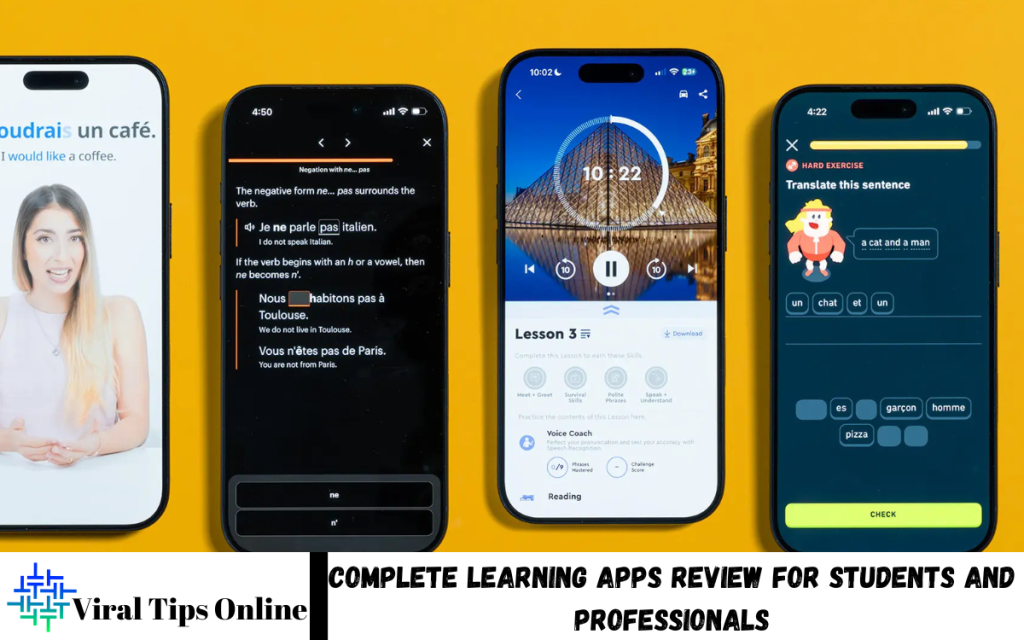
Learning apps have transformed the way students and professionals acquire new skills, improve knowledge, and stay competitive in a fast-changing world. With thousands of educational platforms available, choosing the right app can be challenging.
This complete learning apps review provides an in-depth look at the most popular and effective educational applications available today. We evaluate key factors such as course quality, user experience, pricing, certification value, offline access, and overall learning effectiveness.
Importance of Learning Apps
Traditional classroom environments remain valuable. However, modern lifestyles require flexible educational solutions. Learning applications bridge knowledge gaps through convenient access across smartphones, tablets, and laptops.
Key advantages include:
- Flexible learning schedules
- Affordable educational resources
- Interactive study materials
- Progress monitoring tools
- Personalized recommendations
- Offline content availability
- Professional certifications
- Global instructor access
Students benefit from exam preparation resources. Professionals gain career-focused training without disrupting work commitments.
Essential Features of Quality Learning Apps
Successful educational platforms share common characteristics supporting effective learning outcomes.
High-Quality Content
Reliable applications feature updated course materials developed by experienced educators, industry experts, and subject specialists.
User-Friendly Interface
Simple navigation improves engagement. Clean dashboards, organized lessons, and intuitive controls enhance learning experiences.
Interactive Learning
Interactive quizzes, assignments, simulations, and practice exercises strengthen knowledge retention.
Certification Opportunities
Recognized certificates improve resumes, professional credibility, and employment opportunities.
Mobile Accessibility
Cross-device compatibility enables learning from virtually any location.
Progress Tracking
Performance analytics help learners identify strengths, weaknesses, and areas for improvement.
Community Support
Discussion forums, peer interactions, and instructor communication create collaborative learning environments.
Best Learning Apps for Students
1. Khan Academy
Khan Academy remains among the most respected free educational platforms.
Key Features
- Free educational resources
- Mathematics lessons
- Science courses
- Test preparation materials
- Personalized learning paths
- Interactive exercises
Benefits
Students receive comprehensive academic support without subscription expenses. Structured lessons support school curriculum requirements.
Ideal Users
- School students
- College learners
- Competitive examination candidates
2. Coursera
Coursera provides university-level education through partnerships with globally recognized institutions.
Key Features
- University courses
- Professional certificates
- Degree programs
- Industry projects
- Expert instructors
Benefits
High-quality content delivers academic rigor combined with career relevance.
Ideal Users
- University students
- Skill development learners
- Career-focused professionals
3. Udemy
Udemy offers extensive course libraries covering countless subjects.
Key Features
- Affordable pricing
- Lifetime course access
- Practical projects
- Diverse subject categories
- Frequent discounts
Benefits
A wide variety enables exploration across technical, creative, and business disciplines.
Ideal Users
- Beginners
- Independent learners
- Hobby enthusiasts
4. Quizlet
Quizlet focuses on memorization, revision, and examination preparation.
Key Features
- Flashcards
- Practice tests
- Study games
- Learning modes
- Mobile accessibility
Benefits
Effective revision techniques improve retention, recall, and examination performance.
Ideal Users
- School students
- Medical students
- Language learners
Read Also: Comprehensive Review of Top Shopping Apps: Features, Performance & User Experience
Best Learning Apps for Professionals
1. LinkedIn Learning
LinkedIn Learning specializes in professional development and workplace skills.
Key Features
- Business training
- Leadership courses
- Technology programs
- Creative skills development
- Professional certificates
Benefits
Career-focused content supports promotions, skill enhancement, and workplace productivity.
Ideal Users
- Corporate employees
- Managers
- Freelancers
2. Skillshare
Skillshare emphasizes creative education and practical skill development.
Key Features
- Design training
- Photography lessons
- Marketing education
- Creative workshops
- Community projects
Benefits
Project-based learning encourages practical application.
Ideal Users
- Designers
- Content creators
- Entrepreneurs
3. Pluralsight
Pluralsight serves technology professionals seeking advanced technical expertise.
Key Features
- Programming courses
- Cybersecurity training
- Cloud computing education
- Technical assessments
- Certification preparation
Benefits
Comprehensive technology training supports career advancement within competitive industries.
Ideal Users
- Software developers
- IT professionals
- Cybersecurity specialists
4. edX
edX delivers university-quality education through partnerships with prestigious institutions.
Key Features
- Professional certificates
- Executive education
- Degree programs
- Advanced technical courses
- Academic excellence
Benefits
Strong academic credibility enhances professional qualifications.
Ideal Users
- Working professionals
- Graduate students
- Career changers
Comparison of Popular Learning Apps
| Learning App | Best For | Certification | Free Version | Skill Level |
|---|---|---|---|---|
| Khan Academy | Academic Learning | Limited | Yes | Beginner |
| Coursera | University Courses | Yes | Partial | All Levels |
| Udemy | Skill Development | Yes | Limited | Beginner-Advanced |
| Quizlet | Exam Preparation | No | Yes | Beginner |
| LinkedIn Learning | Professional Skills | Yes | Trial Available | Intermediate |
| Skillshare | Creative Skills | Limited | Trial Available | Beginner |
| Pluralsight | Technology Training | Yes | Trial Available | Intermediate-Advanced |
| edX | Higher Education | Yes | Partial | All Levels |
Learning Apps for Competitive Exam Preparation
Students preparing for examinations require targeted resources.
Popular categories include:
Entrance Examination Preparation
- Engineering entrance tests
- Medical entrance examinations
- Government recruitment exams
- Language proficiency assessments
Features Supporting Success
- Mock examinations
- Performance analytics
- Question banks
- Expert guidance
- Time-management training
Consistent practice improves confidence, accuracy, and examination readiness.
Learning Apps for Career Growth
Professional advancement depends upon continuous education.
Important skill categories include:
Technology Skills
- Artificial Intelligence
- Data Science
- Cybersecurity
- Software Development
- Cloud Computing
Business Skills
- Project Management
- Leadership
- Strategic Planning
- Digital Marketing
- Financial Analysis
Communication Skills
- Public Speaking
- Business Writing
- Negotiation
- Presentation Development
Learning applications provide structured pathways supporting long-term career success.
Factors to Consider Before Choosing a Learning App
Learning Objectives
Identify primary goals before subscription decisions.
Examples include:
- Academic improvement
- Professional certification
- Career transition
- Skill enhancement
- Personal development
Budget Considerations
Evaluate subscription costs against educational value.
Instructor Quality
Experienced educators improve learning outcomes significantly.
Certification Recognition
Industry-recognized certificates provide greater professional advantages.
Content Updates
Regular updates maintain relevance within rapidly evolving industries.
User Reviews
Learner feedback provides practical insights regarding strengths, weaknesses, and reliability.
Advantages of Learning Apps
Accessibility
Education remains available anytime, anywhere.
Flexibility
Self-paced learning accommodates diverse schedules.
Cost Efficiency
Digital education frequently costs less than traditional alternatives.
Personalization
Adaptive recommendations improve educational effectiveness.
Career Enhancement
Professional certifications strengthen employment prospects.
Limitations of Learning Apps
Despite numerous advantages, several challenges exist.
Reduced Face-to-Face Interaction
Limited personal engagement affects collaborative experiences.
Self-Discipline Requirements
Independent learning demands strong motivation.
Certification Differences
Not every certificate receives equal recognition from employers.
Internet Dependence
Reliable connectivity remains essential for many platforms.
Understanding limitations supports realistic expectations.
Future of Learning Applications
Educational technology continues evolving through innovation.
Emerging trends include:
- Artificial Intelligence tutors
- Adaptive learning systems
- Virtual reality education
- Augmented reality training
- Gamified learning experiences
- Personalized educational pathways
Future developments promise improved engagement, accessibility, and effectiveness across academic and professional environments.
Frequently Asked Questions
Can learning apps help with career growth?
Yes, many learning apps offer industry-recognized certifications, professional training programs, and career-focused courses that improve job prospects and workplace performance.
Are certificates from learning apps valuable?
Certificates from reputable platforms such as Coursera, LinkedIn Learning, edX, and Pluralsight can enhance resumes and demonstrate commitment to continuous learning.
Which learning app is best for technology professionals?
Pluralsight, Coursera, and Udemy are excellent choices for technology professionals seeking training in programming, cybersecurity, cloud computing, and data science.
What features should users look for in a learning app?
Important features include high-quality content, expert instructors, progress tracking, mobile accessibility, certifications, interactive exercises, and affordable pricing.
Can learning apps replace traditional education?
Learning apps complement traditional education by providing flexible learning opportunities. However, they may not fully replace classroom experiences, practical training, or degree programs.
Are learning apps suitable for beginners?
Yes, most learning platforms offer beginner-friendly courses, step-by-step tutorials, and guided learning paths designed for users with little or no prior experience.
How do I choose the right learning app?
Choose a learning app based on educational goals, subject interests, budget, certification requirements, learning style preferences, and course quality.
Conclusion
Learning applications play a crucial role in modern education and professional development. Students benefit from academic support, examination preparation, and knowledge expansion. Professionals gain opportunities for career advancement, certification, and skill development.
Successful platform selection depends upon educational goals, budget, preferred learning style, certification requirements, and industry relevance.