
Traditional schooling is falling behind the expectations of industry, leaving employers in dire need of personnel with advanced technological abilities. Millions of recent college grads are at a significant disadvantage when it comes to finding employment because they have no practical experience working with the technologies that are transforming industries like engineering, medicine, and manufacturing.
With the use of artificial intelligence (AI) and real-world 3D printing applications, students will have hands-on experience in the classroom in 2025. These aren’t theoretical ideas; they’re practical resources that progressive educational institutions around the world are using to level the playing field.
3D Printing Brings Concepts to Life

With the help of 3D printing, kids can materialize their ideas. Printing out organ models allows students to better understand anatomy in fields like biology. They can get a tactile knowledge of bygone civilizations by recreating objects in history. Teaching geometric shapes in three dimensions helps students with spatial reasoning, which is a key skill in mathematics.
The use of this technology also encourages originality and fresh thinking. The process allows students to build, test, and improve their prototypes. Improve your problem-solving and critical-thinking abilities with this iterative technique. In addition, 3D printing opens up new avenues of education. Visual and tactile aids can help students who learn in different ways.
AI Ensures Personalized and Intelligent Learning

The use of AI is allowing for more customized educational experiences. It adjusts to the speed and learning style of every student. For instance, platforms powered by AI can instantly evaluate a student’s performance. Because of this, individual needs can be considered while developing lesson plans. Concepts are better understood by students because they receive rapid feedback.
Additionally, AI is making distance learning better. The goal of AI-powered tools like Google Beam is to build fully realistic online lecture halls. To make online learning more interesting, they combine real-time rendering and AI-driven avatars to imitate physical presence.
How Can AI Enhance 3D Printing in Classrooms?
Students can have greater fun and success with 3D printing with the help of AI. With its helpful ideas and error corrections, it aids students in the design process of various things. To illustrate the point, AI can direct a pupil to accurately simulate the size and shape of a bird’s beak, for instance. Students can focus more on learning and making, and less on figuring out the design process.
AI is also useful for educators in managing 3D printing assignments. You can use it to see if your design will print properly and get editing suggestions if it doesn’t. Not only does this save time, but it also cuts down on wastage. By combining AI with 3D printing, students may learn valuable skills while seeing their ideas come to reality faster.
How Can AI and 3D Printing be Used Together in a Classroom?
1. Smart Design Assistance
With the help of AI-powered tools, students may receive real-time feedback and ideas while they create 3D models. Artificial intelligence (AI) can assess the practicality and structural soundness of a student’s design and then suggest ways to enhance it. Students are able to grasp design ideas and engage in iterative learning with the help of this instruction.
2. Personalized Learning Experiences
Machine learning can personalize 3D printing assignments based on student strengths and weaknesses as well as their preferred methods of learning. Students are better engaged and understand more because they are both challenged and helped appropriately through customisation.
3. Enhanced Problem-Solving Skills
The integration of 3D printing with AI inspires students to solve challenging, real-life situations. Students may be required to use AI to refine their design and 3D print a prototype of a tool they’ve created in order to address a local problem. By going through this process, one can hone their analytical and problem-solving abilities.
4. Efficient Workflow Management
By optimizing printing parameters and identifying possible mistakes, AI can simplify the 3D printing process. Students are free to concentrate on the creative parts of their projects because this efficiency decreases downtime and material waste.
5. Interdisciplinary Learning Opportunities
Artificial intelligence (AI) and 3D printing make it easier to combine STEM (science, technology, engineering, art, and mathematics) disciplines in interdisciplinary projects. For example, by creating and printing their own models to showcase scientific principles, students can solidify their comprehension through practical experiences.
AI and 3D Printing in Classrooms: Real-World Examples
1. Montour School District, Pennsylvania, USA
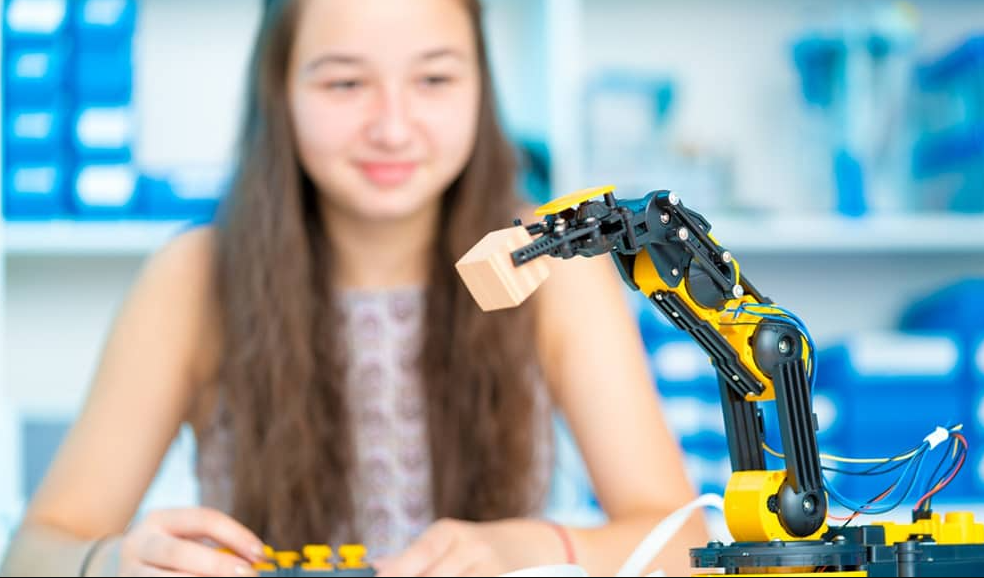
The Montour School District was an early adopter of AI-based instructional strategies. In October 2018, the district and Carnegie Mellon University began an artificial intelligence initiative with the goal of giving all middle school pupils a solid grounding in AI. To prepare students for a future when AI is vital to various aspects of life, the curriculum covers courses in AI Computer Science, AI Music, AI Autonomous Robotics, and AI Ethics.
The first-ever “Brick Makerspace” dedicated to Legos, created in partnership with Carnegie Mellon University and Lego Education, debuted at Montour Elementary School. Students can develop their imaginations and practical skills in this area by doing things like designing and constructing their own cars.
2. Summit Academy, Denver, Colorado, USA
When it comes to improving the curriculum, Summit Academy is all for using AI and 3D printing. In this activity, students will use 3D printers and computer-aided design (CAD) software to create models of structures. For example, in a lesson on earth science, students construct miniature office buildings and then use a shake table to see how well they absorb stress. Students may put their theoretical knowledge to use in real-world situations with this hands-on method that combines 3D printing and AI-driven design tools. This helps them develop their critical thinking and problem-solving abilities.
3. MakerClub, Brighton, United Kingdom
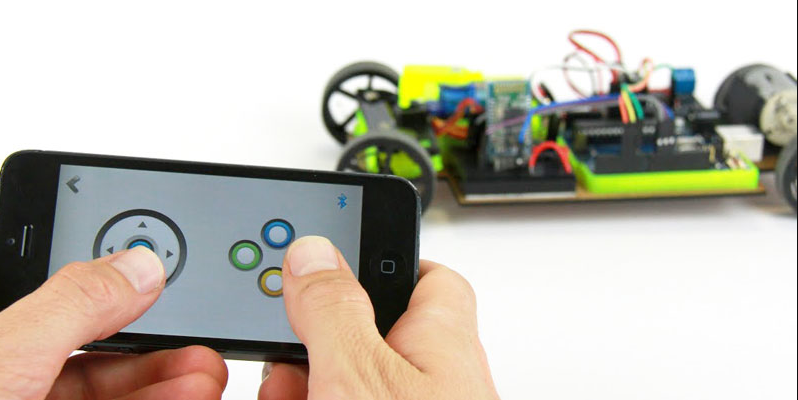
Located in Brighton, UK, MakerClub provides a cutting-edge platform that integrates 3D printing, robotics, and AI to educate kids about engineering and coding. Students at MakerClub, in partnership with faculty from the University of Brighton and other area institutions, create their own 3D-printed robots from the ground up. Students can learn advanced physics, programming, and robotics concepts through hands-on projects involving these AI-programmed robots. In order to better prepare students for future technological developments, the project is striving to make coding more entertaining and accessible.
4. PrintPal’s AI-Powered 3D Printing Projects
Makerspaces and STEM laboratories are two of the many educational environments that can benefit from PrintPal’s new AI-powered 3D printing initiatives. We urge students to think about issues in the classroom and come up with solutions using AI tools. Some examples of these solutions could be clip-on booklights or cable organizers. Students are able to get 3D-printed, optimized models by training AI with their own unique design concepts. In addition to helping students develop their design-thinking abilities, this method showcases real-world problems that AI and 3D printing can solve.
Best 3D Printing Software for Schools
AI personalizes learning by adapting to individual student needs. 3D printing brings abstract concepts to life, enhancing hands-on learning experiences. Having said that, SelfCAD is at the centre of this creative revolution. It is an all-in-one 3D design tool that lets students of all skill levels use advanced modelling. Unlike complicated CAD software, SelfCAD has simple 3D modeling tools along with built-in rendering and slicing features that make it easy for students to go from idea to real creation. The platform has interactive tutorials that walk users through every step, from basic shape manipulation to advanced sculpting methods. This way, students can focus on making their ideas come to life instead of having to deal with technical issues. SelfCAD is a complete creative environment that connects imagination and real-world results. It has features like real-time rendering for visualising designs and an integrated slicer for print preparation.
Conclusion
By 2025, artificial intelligence and 3D printing will have changed the face of schooling. Both students and teachers can benefit from these technologies, which range from AI-generated designs to individualized instruction. Funding and training are still obstacles, but things are looking up for the future. When it comes to preparing children for a tech-driven society, schools that embrace these advancements will be at the forefront.
The most important thing for teachers to do is to take baby steps; look at pilot programs, grants, and training opportunities. With the help of artificial intelligence, 3D printing has become an integral part of the modern classroom.
Frequently Asked Questions (FAQs)
1. By 2025, how will artificial intelligence and 3D printing affect education?
While artificial intelligence (AI) tailors lessons to each student’s unique requirements, 3D printing gives students a chance to put theoretical ideas into practice.
2. What are the advantages of using AI into education?
Artificial intelligence (AI) improves educational outcomes by streamlining administrative chores, providing real-time feedback, and supporting tailored learning paths.
3. How can the use of 3D printing improve STEM education?
Students can use 3D printing to make physical representations of abstract ideas, which encourages innovation and helps them grasp STEM concepts better.
4. Can schools afford to use these technologies?
True, educational institutions are finding it easier and easier to acquire these technologies due to the falling prices of 3D printing and the availability of open-source AI tools.
5. When incorporating AI and 3D printing into the classroom, what obstacles do you see most often?
Training educators, integrating curricula, and guaranteeing all pupils have equal access to technology are all obstacles.